
Hot Insulation
Steam, Boilers & High-Temp Lines
Precision-engineered high-temperature insulation packages for surfaces operating between 100°C and 650°C. Multi-layer mineral wool, calcium-silicate, and ceramic-fibre core systems clad in aluminium or stainless steel jacketing.
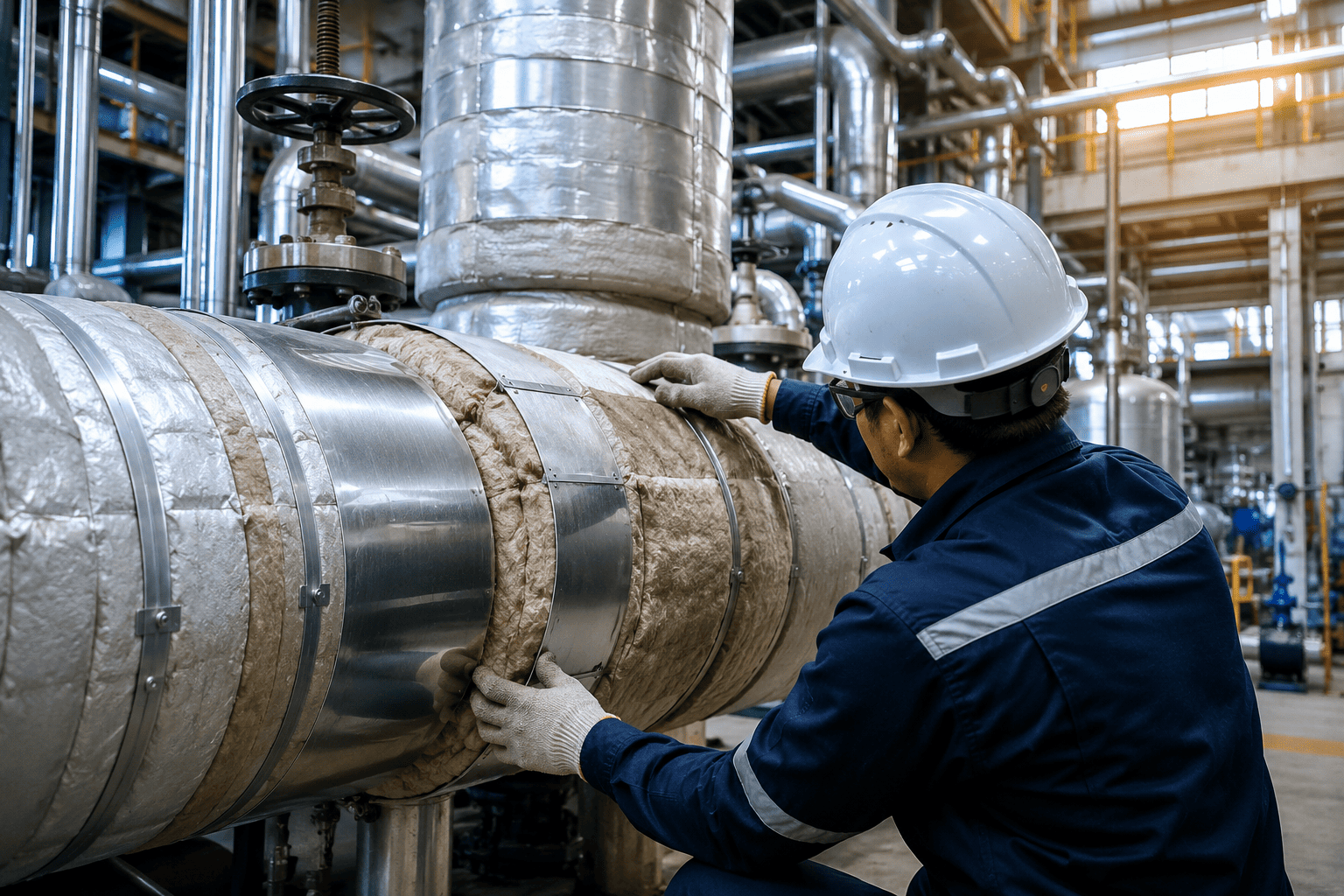
Hot Insulation Engineering
Precision-engineered high-temperature insulation packages for surfaces operating between 100°C and 650°C. Multi-layer mineral wool, calcium-silicate, and ceramic-fibre core systems clad in aluminium or stainless steel jacketing.
Every hot-insulation deployment includes ASTM C680 thickness calculations against surface temp, ambient conditions, and target heat-flux — ensuring measurable energy savings and personnel safety compliance.
Where Hot Insulation Delivers Value
Steam Lines
Distribution headers & branch piping
Steam Drums
Boiler drums & superheater bodies
Furnaces
Industrial furnace shells & doors
Reactors
High-temp process reactors & jackets
Heat Exchangers
Shell & tube exchangers, condensers
Refinery Lines
Crude distillation & cracker piping
Engineered Material Stack
BOQ-driven procurement from vetted OEMs — with mill certificates on demand for every batch.
- Mineral wool (density 80–150 kg/m³)
- Calcium silicate blocks (up to 650°C)
- Ceramic fibre blanket (up to 1260°C)
- Aluminium jacketing (0.5–0.8 mm)
- Stainless-steel cladding (0.5–0.6 mm)
- SS bands, screws, sealants
Why Clients Choose This Module
Reduced Fuel Burn
Direct impact on boiler efficiency and fuel bills
Extended Equipment Life
Reduces thermal cycling stress on pipe metallurgy
Personnel Safety
Touch-safe surface temps eliminate burn hazards
Lower CO₂ Output
Energy savings translate to direct emissions reduction
How We Deliver Hot Insulation
Site Survey
Thermal audit, drawing review, BOQ scoping.
Engineering
Material selection, thickness calcs, MTO release.
Installation
Certified crew, layered systems, hold-point QA.
Handover
Punch-list close, QA dossier, warranty sign-off.
Industries Deploying This Module
Hot Insulation FAQs
We use ASTM C680 calculations to determine optimal thickness based on your surface temp, ambient conditions and target heat-flux. Typically 50–150 mm for hot-service lines.
For lines below 200°C, yes — with proper permits and heat-shielding. Higher temps typically require phased isolation or turnaround-window scheduling.
Aluminium jacketing for indoor/protected environments; stainless steel for outdoor, coastal, or corrosive service. We'll recommend based on your site.
Need a quote on Hot Insulation?
Get the Hot Insulation Technical Datasheet
A print-ready A4 datasheet with material specs, thickness calc guidance, applications, delivery process, and QA/QC hold points — everything your procurement team needs for a spec-compliant BOQ.
- Material stack, densities & spec compliance
- QA/QC hold points & delivery process
- Ready to share internally as PDF
Get instant access to the Hot Insulation datasheet
Enter your business details — we'll open the print-ready datasheet in a new tab. No follow-up unless you request one.