
Cold Insulation
Cryogenic & Chilled-Line Systems
Vapour-sealed cold-retention systems engineered for temperatures down to −180°C. PUF, phenolic foam, and cellular-glass cores with multi-layer vapour barriers prevent condensation, ice formation, and thermal migration.
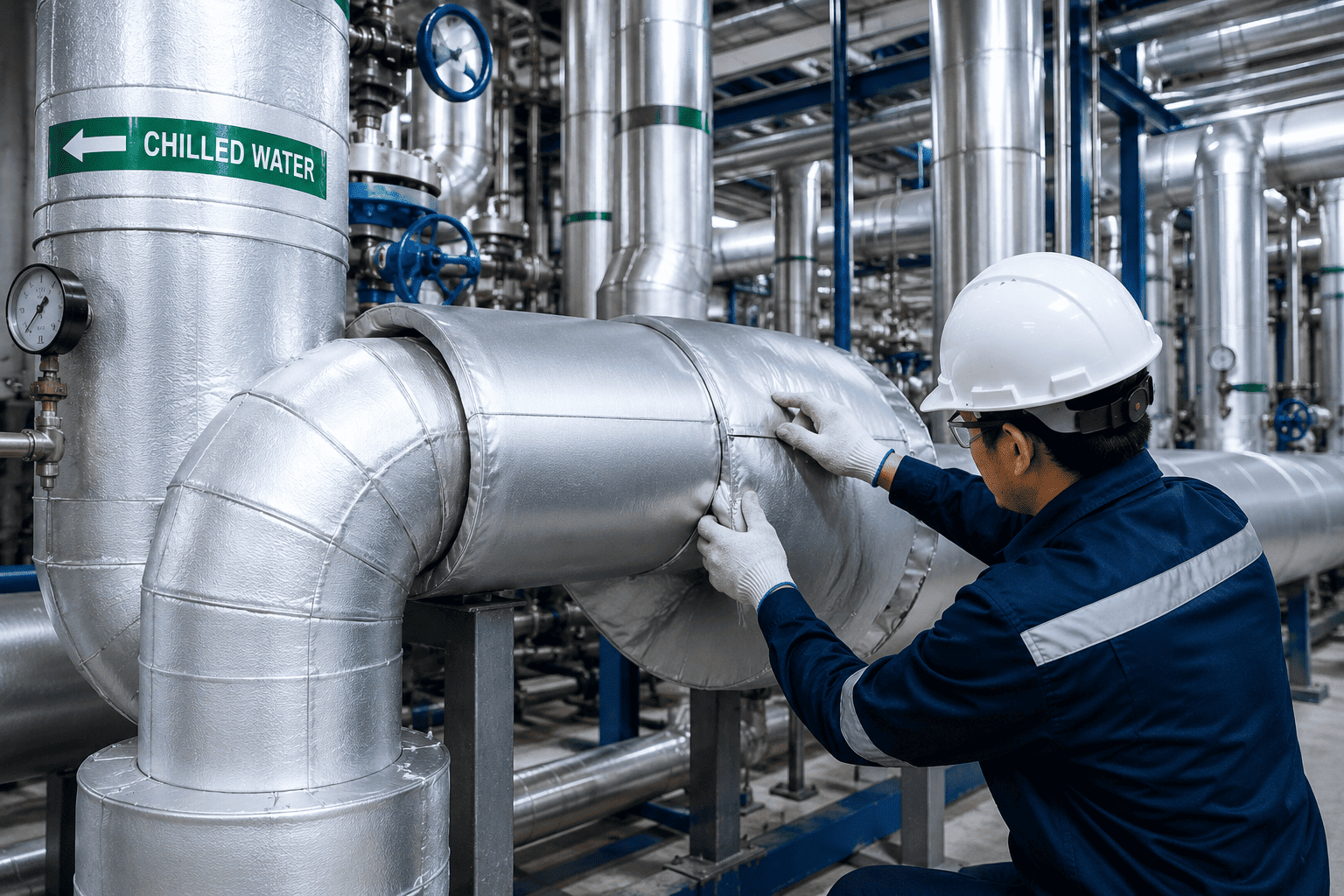
Cold Insulation Engineering
Vapour-sealed cold-retention systems engineered for temperatures down to −180°C. PUF, phenolic foam, and cellular-glass cores with multi-layer vapour barriers prevent condensation, ice formation, and thermal migration.
Every cold-insulation package is executed with strict vapour-barrier integrity — the single most important factor in long-term cold-service performance. Our crews are trained specifically in mastic sealing and cold-side finishing.
Where Cold Insulation Delivers Value
LNG Terminals
Cryogenic vessels & transfer lines
Chilled Water
Building & industrial chilled headers
Cold Rooms
PUF panel walk-ins & warehouses
Brine Lines
Secondary-refrigerant piping
Cryo Tanks
Liquid nitrogen / oxygen storage
Cold Trucks
Refrigerated logistics tank vehicles
Engineered Material Stack
BOQ-driven procurement from vetted OEMs — with mill certificates on demand for every batch.
- PUF (Polyurethane Foam) — density 45 kg/m³
- Phenolic foam boards
- Cellular glass (Foamglas) for cryogenic
- Nitrile rubber (Armaflex) flexible
- Vapour barrier films & mastics
- Aluminium / GI jacketing
Why Clients Choose This Module
Lower Refrigeration Load
Reduces compressor and chiller energy consumption
Condensation Free
Prevents corrosion under insulation (CUI-cold)
Product Integrity
Maintains product temp for cold-chain reliability
Longer Refit Cycles
Vapour-sealed systems last 15+ years
How We Deliver Cold Insulation
Site Survey
Thermal audit, drawing review, BOQ scoping.
Engineering
Material selection, thickness calcs, MTO release.
Installation
Certified crew, layered systems, hold-point QA.
Handover
Punch-list close, QA dossier, warranty sign-off.
Industries Deploying This Module
Cold Insulation FAQs
Cold surfaces attract water vapour from the warm side. Without a sealed barrier, moisture penetrates the insulation, ice forms internally, and the entire package fails within 1–2 years.
We regularly work down to −180°C using cellular glass and phenolic systems. LNG lines, liquid nitrogen tanks, and cryogenic exchangers are all in our scope.
Properly installed cold insulation with sealed vapour barriers typically delivers 15–25 years of maintenance-free service.
Need a quote on Cold Insulation?
Get the Cold Insulation Technical Datasheet
A print-ready A4 datasheet with material specs, thickness calc guidance, applications, delivery process, and QA/QC hold points — everything your procurement team needs for a spec-compliant BOQ.
- Material stack, densities & spec compliance
- QA/QC hold points & delivery process
- Ready to share internally as PDF
Get instant access to the Cold Insulation datasheet
Enter your business details — we'll open the print-ready datasheet in a new tab. No follow-up unless you request one.